










































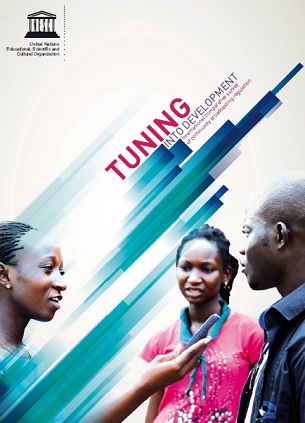
Tuning Into Development: International Comparative Survey of Community Broadcasting Regulation
Centre for Law and Democracy
This 92-page report, published by United Nations Educational, Scientific and Cultural Organization (UNESCO) maps the complex legislative frameworks of community broadcasters in more than 30 countries. It examines how the sector can be strengthened in line with international standards and provides analysis and recommendations that may be of interest to donors and policy makers as they set priorities for media development. The purpose of this report is to promote greater understanding about the challenges and potential of community media, and to highlight better practices. As a growing sector, community radio facilitates access to educational, public health, and agricultural information, and provides an open platform for democratic public debate.
The report shares experiences from around the world about legal recognition for the sustainable and proper management of the community media sector. It traces policy linkages back to international treaties, identifies regional commonalities, compares legal standards, and analyses policy provisions. It examines national regulatory regimes relating to three issues: recognition, definition and form; access and licensing; and funding and sustainability.
The report is organised into the following sections:
- Part I of this Report describes relevant international standards which either provides the jurisprudential underpinnings for community media or which set standards directly for the sector. This provides a background legal framework for the presentation of country practice that follows.
- Part II provides a series of regional overviews, which are intended to give readers an overall sense of developments and directions regarding community radio in each region.
- Part III provides detailed comparative country analysis, broken down into the three issues noted above.
- Part IV looks at a number of countries where the development of regulatory frameworks for community radio either is still in the planning stage or is very underdeveloped. In some of these countries, there is a thriving or important community radio sector, despite the lack of supportive regulation. In other countries, there are plans to introduce dedicated community broadcasting regulation as a first step to developing the sector.
- Part V puts forward a number of recommendations for the regulation of community media, based on both international standards and the way these standards have been given effect in the regulatory systems of different States. This is intended to inform States which are establishing or revising their community broadcasting regulatory regimes, as well as to those advocating for such changes.
According to the report, community radio is an important contributor to the advancement of internationally-agreed development goals and the formulation of international targets for the post-2015 agenda. Nevertheless, the sustainability of the community broadcasting sector depends on legal recognition and regulatory provisions within the broader context of any given media landscape. Community radio stations find it difficult to resolve resource mobilisation and capacity building issues when they operate in conditions where democracy and rule of law is weak and legislative frameworks are absent or poorly defined. This has an impact on the sustained service that community broadcasters can otherwise deliver to rural, grassroots, marginalised, and low income populations. It also constrains the use of information and communication technology (ICT) to enhance improved management practice, online broadcasting, and interactive programmes.
Community media also make a hugely important contribution to the right to freedom of expression, which is defined in international treaties essentially as the free flow of information and ideas in society. They give access to voice possibilities for communities that would otherwise have little or no means of expressing themselves, and they ensure the presence through the media of information of interest and importance to communities. And they are increasingly seen as invaluable for the promotion of development and democracy.
The stimulus for dedicated regulatory regimes is the growing recognition of the important role they can play in fostering the development and growth of community media. If community broadcasters are required to compete on an equal basis, including at the economic level, with commercial broadcasters for frequencies, they will in almost every country be left behind, in particular due to their reduced access to financial and human resources, and consequent inability to compete in open licensing competitions. If they are left to the discretion of regulators, they risk being subject to regulatory indifference or control, or, even worse, political interference. The clear answer to these challenges is specific recognition of community broadcasting in law, along with the establishment of bespoke licensing procedures to ensure that these broadcasters are able to operate and to have access to prevalent distribution platforms, including the airwaves.
The report adds that in many cases, the survival of these broadcasters depends on the existence of special sustainability and legislative regimes, which may lower their costs. They can be supported by controlling their costs through waiving or significantly reducing licence and spectrum usage fees. They should also have access to commercial revenue streams, which are an important supplementary source of funding for them. Sustainability in many contexts is ultimately dependent on the provision of public funding to these broadcasters, whether this comes from domestic or foreign sources.
International standards call on States to recognise all three types of broadcasters: public service, commercial, and community. In many countries, legal recognition of the third type has lagged behind the other two. There is now a clear global trend towards changing this, with many countries having put or currently considering putting in place more comprehensive regulatory frameworks for community broadcasting. If these frameworks are to foster, rather than inhibit, this key broadcasting sector, they must both respect certain minimum standards, and otherwise be carefully designed to reflect local circumstances and needs.
UNESCO website on February 10 2014.
- Log in to post comments