










































Mobile Technology and Inclusion of Persons with Disabilities
Institute of Development Studies
"[This] report focuses on the positive impact that mobile technology has been shown to have in increasing the inclusion of persons with disabilities."
This K4D Emerging Issues report is intended to show how mobile-enabled services can help increase inclusion of persons with disabilities through a synthesis of the current research evidence from low and middle income countries. Strength and quality of the evidence is discussed the annexes of the report.
With over a billion disabled people (or 15% of the global population) (WHO & World Bank 2011)) worldwide (based on an evolving definition of what is included), the sustainable development goals reference this population group "under five of the seventeen goals, in relation to education, growth and employment, reducing inequality, safe and inclusive human settlements, and data collection and monitoring." Benefits of inclusion are listed as: increased earnings and labour productivity, increased tax revenues, improved individual and family well-being, as well as wider societal benefits through a more inclusive and accessible society for all. Six common themes to frame inclusion of persons with disabilities are: "being accepted, having relationships, being involved in activities, living accommodations, employment, and support systems."
Assistive and adaptive technologies to promote independence and participation, for example: text-to-speech and voice recognition, ability to change contrast and colour schemes, touch and gesture input, and screen magnification of information and communication technology (ICT) devices can "enable persons with disabilities to realise independent living, employment, education, and access to government services."
"To assist the wider involvement and fulfilment of people with disabilities in low income societies through the use of ICTs, companies developing new ICTs are encouraged to place accessibility at the heart of their work. Identifying appropriate funding for such initiatives will be essential.... Accessibility in the production, transmission, and rendering ICT technology can be achieved via a mixture of top-down (impose direct obligations on supply side) as well as bottom-up (rights for users/consumers) approaches to promote accessibility in of ICT products and services. Governments can foster ICT innovation and local manufacturing via public-private partnerships. This type of approach would ensure the creation and delivery of ICT accessibility tools and content are both locally and culturally relevant...."
Inclusion barriers and how ICT can help are charted on page 7 and include, for example, the inaccessibility of written or verbal communication can be aided by changing the communication to voice, text, video, depending on the person's disability. Cost barriers are being reduced by mainstream functionalities available in off-the-shelf devices and a growing number of apps and web-enabled service. These can be made particularly appropriate when people with disabilities are included in conceptualisation, design, and implementation. "An example of this concept in operation is Peek Vision, which uses smartphone technology and incentive-based financing to increase access to eye care in Botswana, India, and Kenya. Peek Vision are facilitating teachers to use locally adapted smartphone apps to screen and identify school children with visual impairment."
Smartphones in high-income countries and basic text-messaging systems of standard mobile phones in low-and middle-income countries are the main mHealth tools for communication/diagnostics and record-keeping/research for healthcare workers and their communication with healthcare consumers. "[A] UN Expert Group on Disability Data and Statistics called for further exploration of the potential of collecting data using new technologies", which could be disaggregated by disability.
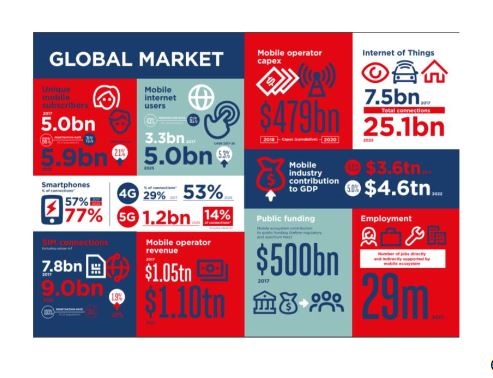
Mobile growth is expected to continue, reaching 5.9 billion people, driven by India, China, Pakistan, Indonesia, Bangladesh, and the regions of Sub-Saharan Africa and Latin America. Mobile-enabled technology such as smartphones and tablets is also spreading and "can improve access to information, promote local knowledge, as well as facilitate sharing and improving social interaction for marginalised populations, such as persons with disabilities countries....The new Mobile Accessibility Checker is an automated test to help strengthen the accessibility features of mobile applications." G3ict [the Global Initiative for Inclusive Information and Communication Technologies] from the United Nations Global Alliance for ICT and Development, in cooperation with the Secretariat for the Convention on the Rights of Persons with Disabilities at UN DESA facilitates work on compliance with the Convention on the Rights of Persons with Disabilities on the accessibility of ICTs and assistive technologies. Five points of action include:
- Cooperation from governments in the accessibility and affordability of ICT-enabled solutions in social and educational programmes, business, and other areas.
- Continuance of UN and international organisations' activities to meet disability-inclusive development goals and monitor and evaluate progress.
- Increased private sector research and development on universal design, especially including disabled persons in product development, as well as hiring and promoting accessible workplaces.
- Awareness raising among policy makers by civil society organisations (CSOs).
- A neutral platform for a disability-inclusive development agenda from which to "develop and harmonise international standards and provide recommendations related to accessible ICT and their applications" through international standards organisations.
C4D website, September 4 2018. Image credit: GSMA
- Log in to post comments