










































Analysis of Data for Communication Planning and Immunization Drop-out Reduction
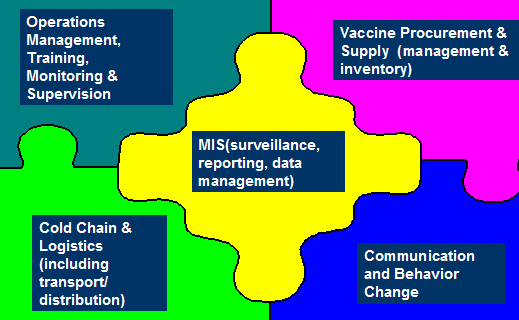
This PowerPoint presentation informed the discussions at a Johannesburg, South Africa, June 16-20 2003 workshop whose purpose was to improve routine immunisation (RI) coverage and to strengthen evaluation and communication strategies.
Due to the fact that the Gavi Vaccine Alliance goal for 2005 was to reach 80% coverage with diphtheria, pertussis (whooping cough), and tetanus (DPT3) in 100% of districts in 80% of countries, this presentation explores factors such as communication and behaviour change that can contribute to meeting that goal. Bolstering coverage can involve factors such as improving access and improving utilisation of existing services (e.g., by increasing demand through information, education, and communication (IEC) strategies).
Also included in the presentation is a list of 5 operational components necessary to reach every district (RED), such as regular meetings between community members and health staff in order to link with service delivery.
"Monitoring for action" is defined as:
- Proper use of Expanded Programme on Immunization (EPI) monitoring tools;
- Indicators that include coverage, completeness, timeliness, and quality of data;
- Use of data to improve planning and management; and
- Use of tools and feedback for self-monitoring at the health facility level (e.g., wall charts that map populations served).
One problem is reaching the "unreached", and several slides define this problem and share data - for instance, around DTP coverage. Some local causes of dropout (this refers to the number of children who start the immunisation schedule but do not complete it) are outlined, such as these communication issues: not told to return, not provided with information on vaccination schedule, health staff perceived as "unfriendly". Several slides provide tools, such as a flowchart to identify priority areas and strategies with regard to dropout. As stated here, dropout analysis is important because it can support goals such as addressing health worker and community mobiliser skills (e.g., interpersonal communication (IPC) on the immunisation schedule and use of the Child Health Record).
In applying the tools outlined in this presentation, the access problems that can be addressed involve advocacy efforts and community buy-in with the health service and staff. When it comes to the challenge of dropout, analysis can support communication activities such as: improving health worker interpersonal communication (IPC) skills; increasing use of vaccination cards as health information tools (e.g., return dates); improving knowledge, attitudes, and practices (KAP) of the community on vaccination services and schedule; and negotiating with communities on outreach. Amongst the possible solutions at the facility level is this suggestion: training community health committees to carry out follow-up tracking of missed children (utilising a follow-up notebook).
Click here for the 22-slide presentation in PowerPoint format.
Email from Mike Favin to The Communication Initiative on February 23 2015.
- Log in to post comments